Wednesday, 2 November 2016

How Individualized Learning Saved Me

Martin Luther King Jr. once said about education that “the function of education is to teach one to think intensively and to think critically. Intelligence plus character- that is the goal of true education.”  This rings true to me on many different levels. I am a strong advocate for an individualized approach to education due to my past experiences with educators who applied this concept. I personally reaped the benefits of having an individualized approach when I entered the second grade. My educator, Mrs. Hann, gave me one on one education in order to help me out of the rut that I was in, due to my living conditions at the time. She helped to shape the type of teacher and person I want to be. Without her attention and help, I likely would have suffered and fell behind during my early years of education. In this essay, I will detail how Mrs. Hann helped me by creating an individualized approach to the curriculum, helping me not only academically, but as well as personally.

During the early years of my education, I was moved around a lot, and thus attended seven different schools by the time I was in second grade. Due to this, when I entered second grade, I was quite behind my peers academically, and struggled to get caught up. It proved to stifle my growth personally as well, as there was always a blatant difference between what I understood, and what my peers spoke about when discussing schoolwork. Being out of school for that first year, created a significant obstacle to overcome. My teacher at the time, Mrs. Hann, managed to spot this deficiency, and took to help me overcome it. With Mrs. Hann’s help, I managed to slowly get caught up academically. Instead of assigning general work for me to improve, she would target certain areas that I suffered on, followed by work that I knew I was well at. This method worked for me because it gave me a chance to improve my flaws, as well as to demonstrate where I shined. This link provides some perspective on how academic success also impacts teachers.  Looking back, a quote by Robert M. Hutchkins really exemplifies what this did for me. He said “the object of education is to prepare the young to educate themselves throughout their lives.” Mrs. Hann did just that for me, she allowed me to see progress in myself, and see how easy and motivating it was to learn. In addition to helping me academically, she also provided a place for my to feel safe. It allowed me to trust her and view her as a friend, which was much needed at the time. This in turn led to me becoming more open in the classroom as well. It helped me to grow socially and become more integrated into the classroom. I went from being a shy and awkward student, to someone who actively participated in class, and looked forward to school.

Mrs. Hann’s individualized approach was successful due to the fact that she not only addressed my issues, but also provided me with an opportunity to build upon my strengths, which in turn created a schedule of work that was rewarding and allowed me to personally see myself working over my obstacles. Mrs. Hann is the teacher I strive to become. Even though I had an individual experience with her, she also did the same with my peers. I witnessed her apply different approaches for different students. Our class was not only thriving academically, but we were also a close group of students that flourished socially as well. I believe that this was all due to Mrs. Hann’s approach to the curriculum. She created an environment where we all succeeded and had a place where we felt we belonged. Many of us witnessed the benefits of having one on one time with Mrs. Hann. I personally looked forward to it, because of the reward and praise that was associated with succeeding in our class both as a person and as a student. I hope that I can create an environment for my students where they don’t feel judged for their problems, and are motivated to grow and see the results.

It is due to my personal experiences with my second grade teacher that I am such a strong advocate for an individualized approach. I grew more as a student with her approach than I have in any other grade following hers. I have also been subject to the mass teaching style that is evident throughout middle school. That style of teaching left me in a place where I was no longer looking forward to school. This was due to the way my education worked at the time. In order for me to get good grades, all I had to do was regurgitate the information on a test, and I was successful. It was no longer challenging me academically, and I did not feel rewarded for my work. Albert Einstein said it best “the only thing that interferes with my learning is my education.” I felt hindered by the style of teaching and learning that was mandated at the time. My work and education were no longer unique for me, and instead was simply churned out in order to make it through the repetitive teachings that made up middle school. When we were given more free reign of our education in high school is when I was able to bring back the method of learning that was taught to my in my early years. I succeeded during high school almost entirely due to this.


An individualized approach provides many benefits, which are centered on the learning style that works best for each student. By applying an individualized approach to the curriculum, the teacher not only addresses the underlying issues behind a student’s academic troubles, but also creates an atmosphere in which the student is more likely to develop a positive bond between student and teacher. Here is a link that shows a teacher positively influencing her class. This allows students more motivation to progress and look forward to their education. I believe that adopting this style of teaching will allow me to succeed as a teacher and help to pay forward the good habits that Mrs. Hann instilled in me.

Thursday, 20 October 2016

Create Positive Learning in the Classroom!

Positive Learning

In a classroom there is many things that an educator can do to help the student progress. The environment in which the students are surrounded has a huge impact on their learning. Along with help from the teacher, students must also contribute to positive learning with their good attitude and willingness to learn. Another huge contribution students can do to further better their learning environment is through feedback. By giving feedback they remove the guessing game on the educators part and help to create a mutually beneficial setup for both the educator and student. This blog portrays as a short tid bit of information. I will post a few small links to which help install positive learning, and how to introduce positive learning in the classroom.

In article one it shows what an educator can do to create a positive learning experience in the class.

            This second article has really good information about the “PERMA model- (five elements of wellbeing” 

– Positive Emotions: Feeling positive emotions such as joy, gratitude, interest, hope.
– Engagement: Being fully absorbed in activities that use your skills yet challenge you.
– Relationships: Having positive relationships.
– Meaning: Belonging to and serving something you believe is bigger than yourself.
– Accomplishment: Pursuing success, winning achievement and mastery.

https://positivepsychologyprogram.com/what-is-positive-education/

The key to having a positive environment in the classroom is RELATIONSHIPS, RELATIONSHIPS, RELATIONSHIPS. As a teacher if you can make friends with the students, and learn more about them (how they learn), than you can create a more individualized teaching style for each student. If you understand your students, and they feel comfortable with you, the overall experience in the class will be more beneficial for the teacher and students. It will allow both academic growth for the student, as well as a place where the student can feel safe to show their true colours. 


Wednesday, 19 October 2016

Bringing Education Back to its Roots

Book Review:
                                             
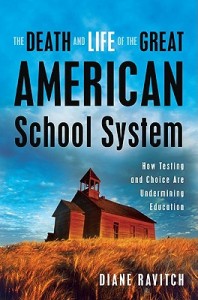
     The United States of America’s school system has constantly been criticized for its failure in addressing its downfalls. Diane Ravitch the author of “The Death and Life of the Great American School System”, breaks down these issues and addresses the root cause of the problems within the school system. Ravitch was a traditional educator who believed in the ideals that supported the No Child Left Behind (NCLB) reform of 2002. She and her mentor, Lawrence A. Cremin, were both traditional educators who saw the instalment of standardized testing and accountability as a step forward. What makes Ravitch such a solid source is due to the fact that she flipped her perspective and now strongly advocates for a change in the school system. She argues that standardized testing not only hinders student growth, but also completely stalls the education system as a whole. Ravitch begins with an introduction to the pillars on which the education reform was built upon, such as the bell curve, punishments based on test scores, and a gap in education between the poor and the rich. She then assesses the disparities that NCLB initiative attempted to address, but failed to do. She expresses how although she initially was excited for the reform, and saw an opportunity for real growth, she soon saw the major deficiencies that arose with the reform.
As an initial advocate for accountability, standardized testing, and all the principles that accompanies the ideals on which the No Child Left Behind act set in place by George W. Bush in 2006, Ravitch was a picture perfect “reform” educator. The No Child Left Behind Act, essentially made educators, and schools responsible for low test scores, and created an emphasis on test preparation, in order to raise the nations low test scores. Ravitch played a large role in the installment of the curriculum for the federal government, during a time when installing any curriculum by the federal government was considered illegal.  Her colleagues and her, found loopholes that allowed the federal government to install curriculum by making it seem as though the schools were electing that curriculum.  Ravitch details the beginning of education as a business, and how these business tactics would help to move education from an era that stalled and saw no progress into a new era, where a business model would supposedly have all the answers. She bought into the very fads that she had initially despised. Ravitch’s perspective changed from educator to administrator “[w]ith the collapse of communism and the triumph of market reforms in most parts of the world, it did not seem to be much of a stretch to envision the application of the market model to schooling” (79).  Applying the market models to education allowed the administration to no longer take place in the “blame-game” as everything was decided based on numbers. It wasn’t until the reform was finally enacted in schools across the nation, that it began to fail. She experienced a severe shift in perspectives as all of the deficiencies of these ideals came to light. Her entire educational belief system had failed her. This is what led her to go through a time of critical doubt that in turn helped her create a new philosophy on which she can base her system of education. The market reform proved to be an awful system for both students and teachers alike by removing the individuality from the education system. In addition, the emphasis on testing also proved to be an issue.
Ravitch states in her book that, “[t]esting, [she] realized with dismay, had become a central preoccupation in the schools and was not just a measure but an end in itself” (85). Ravitch gives readers some serious food for thought: she appeals to both sides of the administrative takes on education. She gives us a glimpse into the inner workings of the market reformed administrative system, as well as highlights the shortcomings of said system. What was important to administrators were test scores. Suddenly, a form of measurement became the goal of education. Ravitch had begun to notice that “constant test preparation sometimes generated higher test scores- but it had nothing to do with education” (91).  Ravitch goes on to elaborate on the impact “a nation at risk” had during the times of education reform, and how it’s legacy left schools without a real framework. “A nation at risk” was a report published in 1983 by a presidential commission on excellence of Education during the Reagan administration. At the time it detailed the failing of the current American school system. It was misinterpreted and used as leverage for the politicians even though it had honest intentions and seemingly unbiased rhetoric throughout the work. The misinterpretation came from the lack of solid solutions to the problems laid out in the report. This allowed the “market-reform” to take hold by seemingly providing these solutions. The market reform only went on to further neglect the poverty and racial segregation that contributed to the lack of uniform education throughout the nation.
             Ravitch lays out all the information in a series of events, all beginning from the tumultuous start of the market based curriculum, leading up to the reform that occurred in 2002 with the NCLB act. She begins by detailing the A Nation at Risk (ANAR) report, which began the groundwork for the NCLB act to thrive upon. It was of great importance during the Reagan administration due to the fact that it was a culmination of all the shortcomings that were happening in the United States of America. The republicans used schools as a scapegoat for all of these shortcomings. Ravitch takes us through all this in detail, in order to bring to light the events of the past that have directly had an impact on schooling today. Ravitch’s perspective fits with the discussion happening in the field currently. It aligns mostly with the perspective of educators. It addresses the same issues as that of a student, but it does this through the arguments of the educators. Ravitch’s book is of great relevance to the current conversation, where people are arguing about the true nature of education, and how the current school system is neglecting this nature and stifling growth for both the school system, and the students.
Ravitch concludes by addressing the root cause of the disparities as the lack of uniform education throughout the nation. Students and administrators alike would benefit from reading this book, as it gives history for the basis of the current education system, and gives readers an idea as to what lead to the reform, and how it can be addressed. This book allows people to see how education reform isn’t a one-stop fix, but rather a series of progressions leading to a more efficient system. It also allows readers to understand the vital role that teachers play, and how powerless they are when it comes to administrative problems. It gives students, especially, an idea of who’s to “blame” for the mishaps that are happening with the education system, as well as more respect for their educators, who become the mediators between the truth behind the education system, and their students.
            In conclusion, Ravitch’s work in “The Death and Life of the Great American School System,” puts forth the complicated issues present in the school system through the perspective of both educators and students. The book allows readers to become more informed on their school system. I highly recommend this book for anyone interested in the past errors of the education system in the United States of America. Ravitch lays out information that students, educators, parents, and administrators can all easily understand and take action with. 


Diane Ravitch
 The Death and Life of the Great American School System.”
Published 2010.
400 Pages.
$34.83.